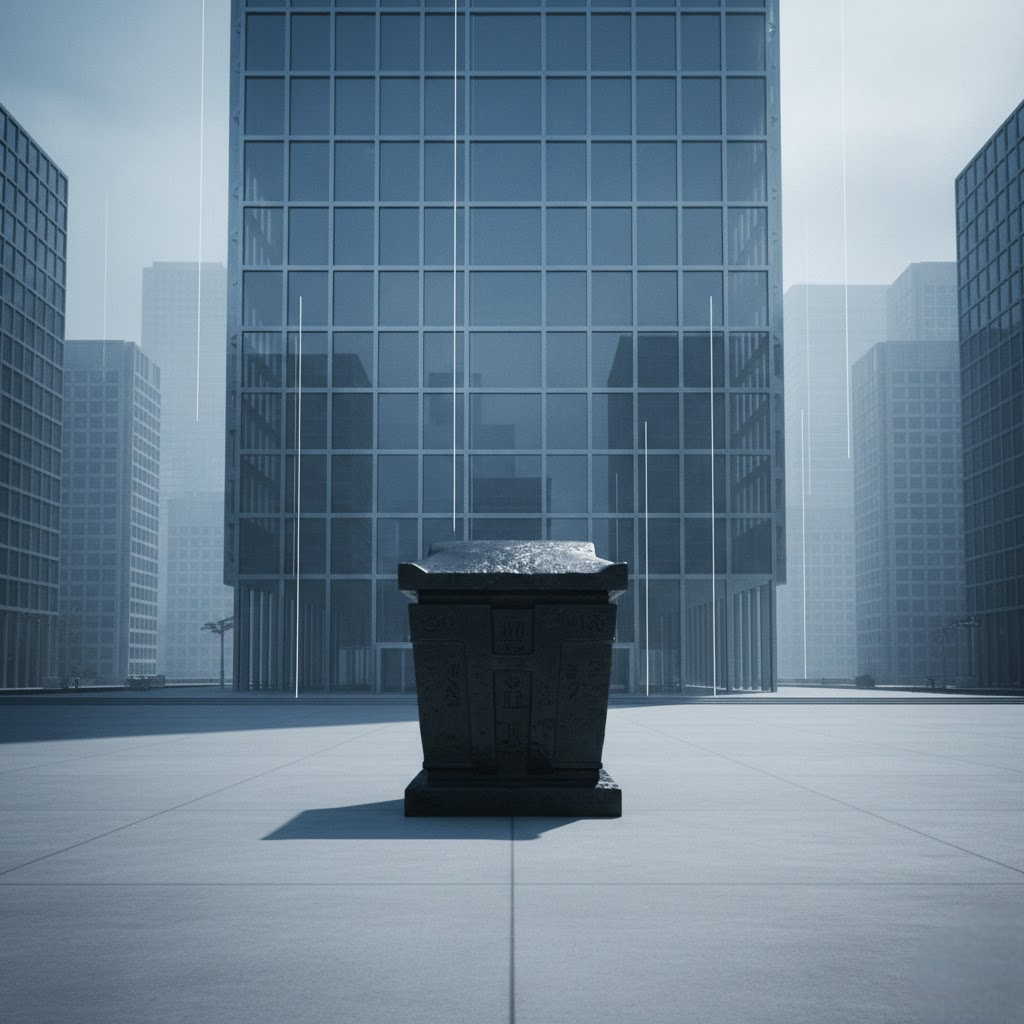
WE COMPLETED ONE JOURNEY. NOW WE BEGIN ANOTHER.
Over the past year, we explored twelve architectures of memory across cultures and continents.
We saw how Rome speaks in stone and names. How Africa speaks in presence and voice. How India speaks in dissolution and freedom.
Each culture had a philosophy. Each philosophy had a form. Each form answered the question: How do we honour the dead?
But something happened that changed everything at once.
The world became urban.
WHAT HAPPENS WHEN TRADITION ENTERS THE CITY?
A city is a machine of forgetting. It works fast. It requires efficiency. It has no space for slow rituals.
A cemetery requires land. Land in a city is a commodity.
A funeral requires family gathered in one place. In cities, families are scattered across districts, time zones, continents.
Cities are not hostile to memory. Cities are simply not designed for it.
And so traditions don't disappear. They transform.
In Moscow, the state erased memory. Memory came back in distorted forms—screaming monuments in cemeteries.
In London, capitalism turned death into real estate. A grave costs more than an apartment in the suburbs.
In Paris, the city hid death underground—in catacombs, archives, memory.
In Venice, water forced a rethinking of burial itself.
THE SECOND CYCLE: TWELVE CITIES, TWELVE TRANSFORMATIONS
We invite you on a second journey.
The first was a journey through cultures. We saw abstract philosophy become concrete architecture.
The second is a journey through cities where that philosophy meets reality.
MOSCOW will show us how erasure becomes remembrance.
BERLIN will show us how pain becomes honesty.
LONDON will show us how capital captures even death.
PARIS will show us how ideas defeat facts.
VENICE will show us how water reimagines eternity.
VARANASI will show us cremation not as ending but as liberation.
KYOTO will show us how time becomes monument.
MEXICO CITY will show us that death can be celebration even in a metropolis.
BANGKOK will show us Buddhism surviving among skyscrapers.
NEW YORK will show us how democracy descends into cemeteries.
JERUSALEM will show us that the dead agree where the living fight.
ISTANBUL will show us a city split between two deaths.
WHAT THIS MEANS FOR DESIGN
Each city is a laboratory.
Each city asks: What happens to memory when it's pushed to the margins?
The answers are different. But they all reveal the same truth: memory doesn't disappear. Memory transforms.
And this is where VOYAGER enters the conversation.
If cities are laboratories where tradition meets modernity, then death design is the experiment.
How do you honor tradition when conditions demand innovation?
How do you create ritual when space for ritual has vanished?
How do you make something beautiful when the system demands efficiency?
VOYAGER asks these questions through form. Through material. Through proportion.
Each coffin is a response to the city it's designed for. Each design carries the wisdom of cultures that came before, adapted to conditions that exist now.
THE PHILOSOPHY BEHIND THE FORM
This is why we're publishing this second cycle in parallel with The Voyager Journal.
The column will show you how cities have transformed ancient traditions.
The journal will show you how VOYAGER answers the questions those cities have raised.
They are two sides of the same inquiry:
How do we die well in the modern world?
AN INVITATION
Beginning next month, we will journey through twelve cities.
We will see ancient philosophy meet modern concrete.
We will see memorials crumble and resurrect in new forms.
We will see death—still beautiful, still sacred, still essential—searching for itself in the metropolis.
And we will show you how VOYAGER, through careful design, offers a possibility: that beauty in death is not a luxury. It is a necessity.
That honesty in memorial design is not sentimental. It is political.
That the way a city approaches death reveals everything about the way it approaches life.
The journey continues.
The cities await.
This article publishes as the bridge between cycles, as both closure and opening.
Over the past year, we explored twelve architectures of memory across cultures and continents.
We saw how Rome speaks in stone and names. How Africa speaks in presence and voice. How India speaks in dissolution and freedom.
Each culture had a philosophy. Each philosophy had a form. Each form answered the question: How do we honour the dead?
But something happened that changed everything at once.
The world became urban.
WHAT HAPPENS WHEN TRADITION ENTERS THE CITY?
A city is a machine of forgetting. It works fast. It requires efficiency. It has no space for slow rituals.
A cemetery requires land. Land in a city is a commodity.
A funeral requires family gathered in one place. In cities, families are scattered across districts, time zones, continents.
Cities are not hostile to memory. Cities are simply not designed for it.
And so traditions don't disappear. They transform.
In Moscow, the state erased memory. Memory came back in distorted forms—screaming monuments in cemeteries.
In London, capitalism turned death into real estate. A grave costs more than an apartment in the suburbs.
In Paris, the city hid death underground—in catacombs, archives, memory.
In Venice, water forced a rethinking of burial itself.
THE SECOND CYCLE: TWELVE CITIES, TWELVE TRANSFORMATIONS
We invite you on a second journey.
The first was a journey through cultures. We saw abstract philosophy become concrete architecture.
The second is a journey through cities where that philosophy meets reality.
MOSCOW will show us how erasure becomes remembrance.
BERLIN will show us how pain becomes honesty.
LONDON will show us how capital captures even death.
PARIS will show us how ideas defeat facts.
VENICE will show us how water reimagines eternity.
VARANASI will show us cremation not as ending but as liberation.
KYOTO will show us how time becomes monument.
MEXICO CITY will show us that death can be celebration even in a metropolis.
BANGKOK will show us Buddhism surviving among skyscrapers.
NEW YORK will show us how democracy descends into cemeteries.
JERUSALEM will show us that the dead agree where the living fight.
ISTANBUL will show us a city split between two deaths.
WHAT THIS MEANS FOR DESIGN
Each city is a laboratory.
Each city asks: What happens to memory when it's pushed to the margins?
The answers are different. But they all reveal the same truth: memory doesn't disappear. Memory transforms.
And this is where VOYAGER enters the conversation.
If cities are laboratories where tradition meets modernity, then death design is the experiment.
How do you honor tradition when conditions demand innovation?
How do you create ritual when space for ritual has vanished?
How do you make something beautiful when the system demands efficiency?
VOYAGER asks these questions through form. Through material. Through proportion.
Each coffin is a response to the city it's designed for. Each design carries the wisdom of cultures that came before, adapted to conditions that exist now.
THE PHILOSOPHY BEHIND THE FORM
This is why we're publishing this second cycle in parallel with The Voyager Journal.
The column will show you how cities have transformed ancient traditions.
The journal will show you how VOYAGER answers the questions those cities have raised.
They are two sides of the same inquiry:
How do we die well in the modern world?
AN INVITATION
Beginning next month, we will journey through twelve cities.
We will see ancient philosophy meet modern concrete.
We will see memorials crumble and resurrect in new forms.
We will see death—still beautiful, still sacred, still essential—searching for itself in the metropolis.
And we will show you how VOYAGER, through careful design, offers a possibility: that beauty in death is not a luxury. It is a necessity.
That honesty in memorial design is not sentimental. It is political.
That the way a city approaches death reveals everything about the way it approaches life.
The journey continues.
The cities await.
This article publishes as the bridge between cycles, as both closure and opening.
2026 © The Voyager Journal
Where Art Meets Eternity
Creative Direction: Iskandar Kadyrov
All coffins are 100% authentic. Design protected by patents.
18+
This concept was first explored in the author's column "Death in the Big City," published on https://iskandarkadyrov.ru/
Where Art Meets Eternity
Creative Direction: Iskandar Kadyrov
All coffins are 100% authentic. Design protected by patents.
18+
This concept was first explored in the author's column "Death in the Big City," published on https://iskandarkadyrov.ru/